While you might think vertigo and dizziness are the same thing, there are actually many causes of dizziness. The most common of them is Benign Paroxysmal Positional Vertigo (BPPV), a spinning sensation experienced with head or body movements. That spinning sensation is caused by calcium carbonate “crystals” moving around your inner ear canal. If you suspect you might be suffering from BPPV, please reach out to our expert BPPV treatment team at LifeMotion.
BPPV Defined
Benign – not dangerous or life-threatening
Paroxysmal – sudden, brief episodes
Positional – triggered by changes in head position
Vertigo – a false sensation of spinning
Ever felt the “room spinning” BPPV feeling?
You typically experience the onset of vertigo lying down, rolling over in bed, tilting your head back to look up, or bending over. You’ll find the episodes are typically less than a minute, but can last longer.
While the causes of BPPV are often unknown, it is more common following:
- Head trauma
- An illness (i.e. inner ear infection)
- Sudden changes in fluid in the inner ear
We also see spikes with seasonal allergies. Women are more affected than men and occurrence increases with age.
How We Diagnose BPPV
We diagnosis BPPV at LIfeMotion through symptoms and/or positive findings with specific head positional testing. This test is commonly known as the Dix-Hallpike.
BPPV can also be caused by inner ear disorders that may require further testing called videonystagmography (VNG). VNG testing helps provide more information about underlying inner ear conditions. We also use infrared googles to help us further pinpoint the specific canal and side that’s experiencing BPPV.
BPPV Treatment in Tulsa at LifeMotion
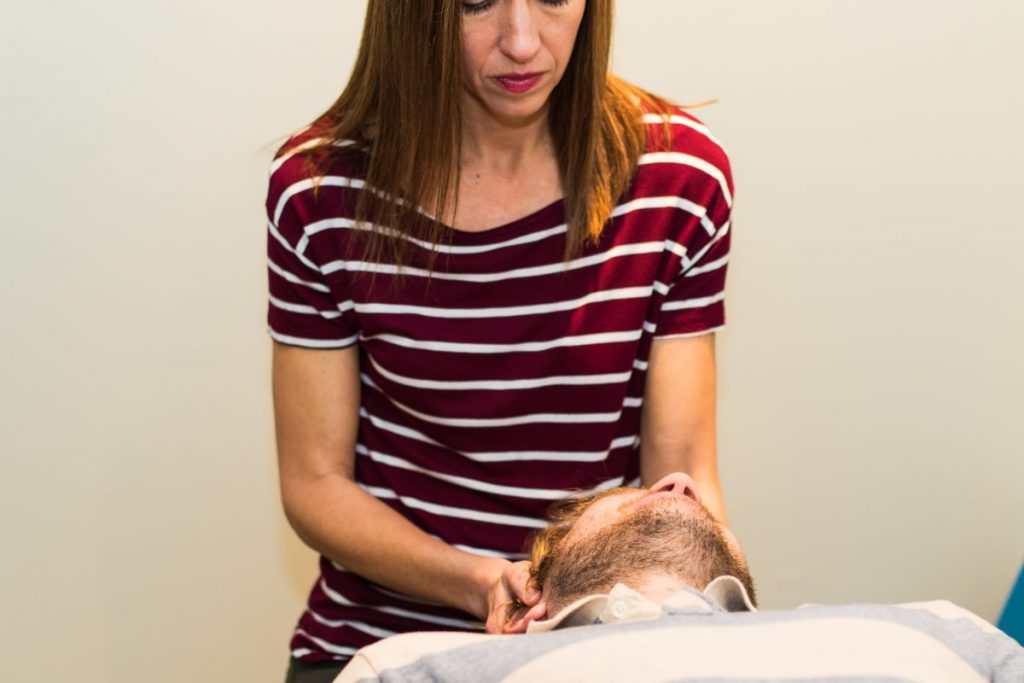
The most effective treatment of BPPV is a series of head and body movements known as “repositioning maneuvers.” These procedures are performed by a trained LifeMotion clinician and include moving the patient through a series of specific positions to move the crystals back into a proper place of the inner ear.
The maneuver is specific to the right or left ears as well as the specific semicircular canal. The crystals can be “free floating” within the canal or stuck to part of the canal. The most commonly affected canal is the posterior canal and is treated with the Epley maneuver.
The horizontal canal may also be affected and is treated with the Roll or “barbeque roll” maneuver. At LifeMotion we have a 95% success rate within two visits using this treatment.