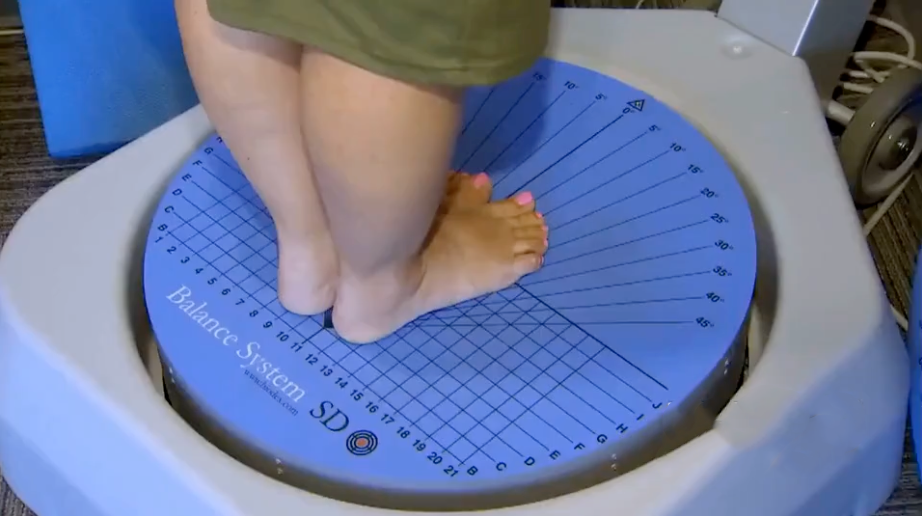
Balance Is a Brain Skill — Not Just Strength
If you’ve ever felt dizzy rolling in bed, uneasy walking in the dark, hesitant on stairs, or suddenly unsure of your balance—even though you feel strong—you’re not alone.
Many people assume balance problems come from weak muscles.
But the truth is that balance is primarily a brain skill.
Your brain must rapidly process information from your inner ear, eyes, joints, and muscles to keep you upright and moving safely. When these systems stop coordinating efficiently, even strong and active people can begin to feel unsteady.
The good news?
These systems can be retrained.
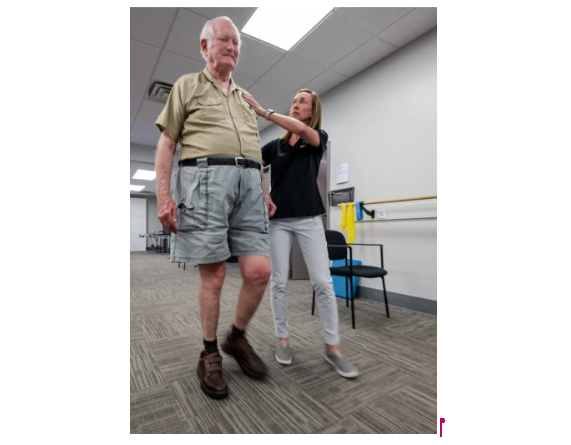
Client Spotlight
One of the most rewarding parts of balance rehabilitation is watching someone regain their confidence and return to the activities they love.
From walking through the grocery store without fear…
to traveling again…
to playing with grandchildren without worrying about falling.
Watch One of Our Success Stories
In this short video, one of our patients shares their experience with dizziness and how vestibular therapy helped them regain stability and confidence.
What Balance Really Is
Balance is not just about your legs.
It’s actually a coordinated system between several parts of your body working together at once:
- Your inner ear (vestibular system) detects motion and head position
- Your eyes give your brain visual feedback about your environment
- Your joints and muscles (proprioception) tell your brain where your body is in space
- Your core and hips provide stability and alignment
- Your nervous system processes all of this information and reacts quickly
When this system works well, balance feels automatic.
When communication between these systems slows down or becomes inefficient, you may start to notice:
- Feeling unsteady
- Difficulty standing on one leg
- Hesitation on uneven surfaces
- Fear of falling
Balance is really about adaptability, not stiffness. True stability comes from the brain’s ability to process information quickly and respond efficiently.
Why Balance Breaks Down
A common moment during a balance evaluation happens when a patient attempts a test and suddenly says:
“I just don’t know what happened—I used to be able to stand on one leg no problem!”
Somewhere along the way, their balance changed.
As we age, the communication between the systems responsible for balance can become less efficient. When additional factors are layered in—such as medications, poor sleep, injuries, illnesses, or lifestyle stressors—the challenge becomes even greater.
Common contributors include:
- Injury or pain altering proprioception
- Concussions or illness disrupting vestibular input
- Postural changes or deconditioning
- Aging affecting sensory processing speed
- Chronic stress increasing motion sensitivity
When these systems stop coordinating efficiently:
- Reaction time slows
- People compensate by stiffening or gripping muscles
- Confidence decreases
- Fall risk increases
Most balance problems are not just a strength problem—they are a coordination problem.
Improving balance requires training the brain and body together.
Why Traditional Balance Exercises Fall Short
Many people try to improve their balance by doing simple exercises like standing on one leg or holding a static pose.
While these exercises may help somewhat, they often don’t challenge the systems that actually control balance.
Common limitations include:
- Standing on one leg without changing sensory input
- Avoiding head movement
- Over-bracing or breath-holding
- Never practicing balance with reduced vision
- No vestibular assessment
Effective balance rehabilitation must challenge the brain, not just the muscles.
That means training how your nervous system responds to movement, visual changes, and real-life situations.
NEW AT LIFEMOTION
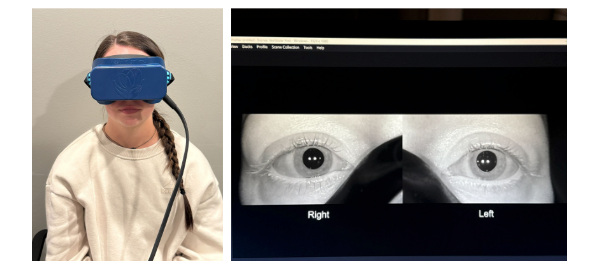
Advanced Vestibular Assessment with Infrared Goggles
LifeMotion Balance Center physical therapists specialize in evaluating and treating dizziness and balance disorders.
To elevate the precision of our assessments, we are excited to introduce Insight Pro+ Infrared Goggles.
These specialized goggles allow us to observe and record involuntary eye movements (nystagmus) in complete darkness.
By removing visual fixation, we can more accurately analyze how the inner ear and brain are functioning.
This allows us to:
- Identify vestibular dysfunction with greater precision
- Differentiate inner ear disorders from neurological causes of dizziness
- Develop more targeted treatment plans
- Track patient progress over time
Conditions We Frequently Diagnose
BPPV (Benign Paroxysmal Positional Vertigo)
One of the most common causes of vertigo. Real-time video allows us to identify exactly which ear canal is affected so we can perform the most effective repositioning maneuver.
Vestibular Neuritis
Often missed in emergency departments but clearly identified through vestibular testing. With proper diagnosis, an effective rehabilitation plan can significantly improve recovery.
The goggles can also record sessions for later analysis and patient education.
This technology helps ensure we are not relying on symptoms alone—we are assessing what the nervous system is actually doing.
The LifeMotion Balance Progression
Effective balance rehabilitation progresses through several phases.
Early Phase – Reset and Restore
- Gaze stabilization
- Breathing and posture coordination
- Gentle vestibular retraining
- Static balance with alignment awareness
Mid Phase – Controlled Challenge
- Head movement while walking
- Surface variability
- Dual-task training (movement + cognitive demand)
- Reaction time drills
Late Phase – Real-World Resilience
- Agility and directional changes
- Uneven terrain simulation
- Sport- or lifestyle-specific drills
- Fall prevention training
- Confidence restoration
Feeling Dizzy, Unsteady, or Concerned About Your Balance?
You don’t have to wait until a fall happens to address balance issues.
If you’ve noticed:
- dizziness when turning your head
- vertigo when rolling in bed
- feeling unsteady walking in the dark
- difficulty with stairs or uneven ground
- recent falls or near-falls
Our vestibular specialists can help identify what system is causing the problem and develop a targeted treatment plan.
Two Ways to Get Started
Schedule a Vestibular Evaluation
Our therapists perform comprehensive assessments—including advanced vestibular testing—to determine the root cause of dizziness and balance problems. To schedule your consultation, you can call our office or book online here.
Free Balance Screen
Not sure if therapy is needed?
Call our office at (918) 574-2575 or book online to schedule a free balance screen, where a therapist can quickly assess your balance and recommend next steps.